How YC Was Created With Jessica Livingston
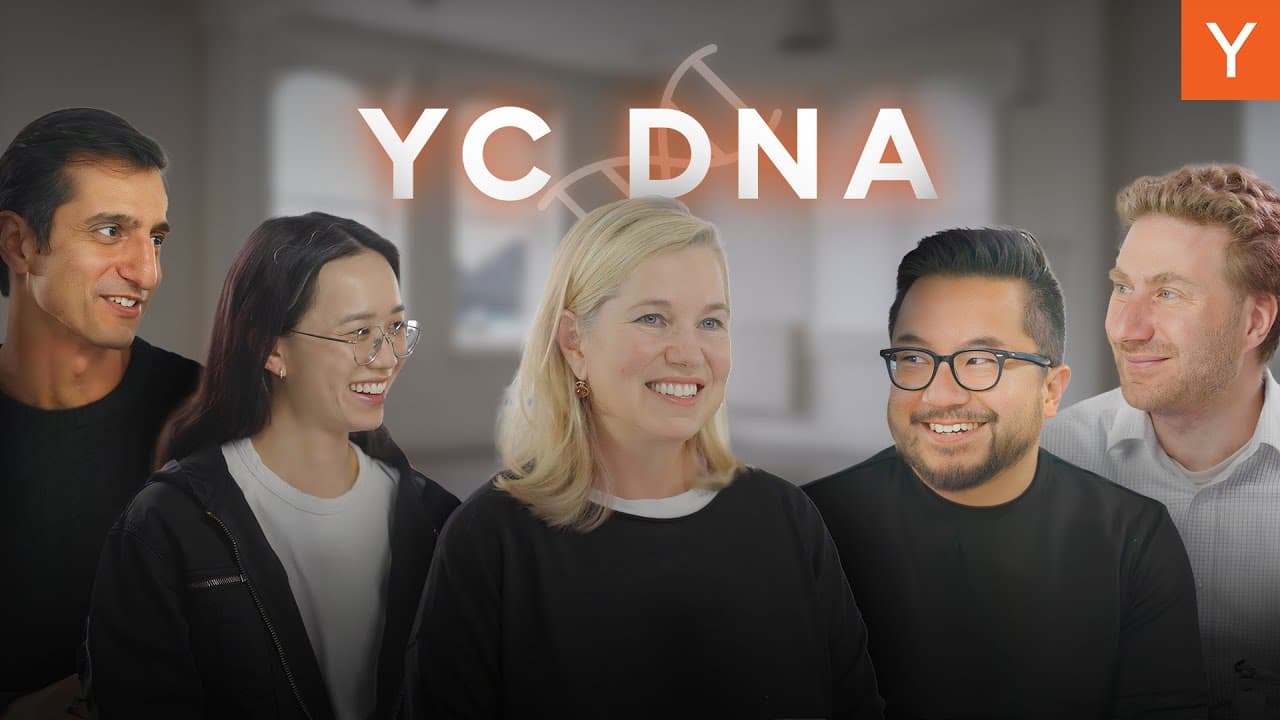
Jessica Livingston, co-founder of Y Combinator, shared insights from YC's early days during her visit to the SF headquarters. Key topics included YC's uniqueness, the importance of events, the first batch, alumni support, and lessons learned from interviewing founders, highlighting YC's evolution from underdog to a respected institution.
Part of Y Combinator Collection
Startup Wisdom
Explore 500+ transcripts from Y Combinator's startup accelerator program, featuring insights from successful entrepreneurs and industry leaders.
Browse Full CollectionConvert your Audio Video Files to Text
Speaker Separated Transcription98% Accurate
Free for files under 30 minutes
That first batch, which is kind of magical in terms of the group of people and the outcomes, what did it feel like?
It was like one of the most fun times in my life because everyone really wanted to be there and really wanted to start a startup. That's when it felt like, hey, we're onto something here. Y Combinator is on a whole new level now with, again, all of the knowledge and all of the connections and its brand and everything. But it is true that the core of it is the same. And I just think that's so cool. Don't change it if it ain't broke, right?
Welcome back to another episode of The Light Cone. I'm Gary. This is Jared, Harj, and Diana. And collectively, we funded hundreds of billions of dollars worth of startups right when they were just one or two people. And today, we have a very special treat. We're sitting down with Jessica Livingston, one of the co-founders of Y Combinator, who actually funded all of us right at the beginning of our careers as founders. Jessica, welcome.
Thanks. I'm so excited to be here.
So we're sitting down with none other than the social radar herself. Why do we call you the social radar, actually?
Gosh, I mean, it's a it's a little embarrassing, but I have embraced it. Obviously, it's the name of my podcast. But it all started years and years ago because Paul used to call me the social radar because he was always interested in technical elements of founders. And I just dug right in to more personal sides of things, more of their personality. And then it just stuck and it grew. So I finally have just leaned into it.
So one of the things that really attracted me to YC very early was how different it felt than all the other people who could possibly fund you at the earliest possible stage. It didn't feel like working with a VC or even talking to a VC.
Well, Gary, that's what it was meant to do. I mean, I'm making a joke, but we really did start it because there was nothing else like that at the time. And at the time, there were really just we were in Boston, which was even more different than Silicon Valley. So there were venture capitalists who wanted to invest millions of dollars in you. And you needed to have a business plan and even an idea that was a little bit tested and all of that. Or there were random angels. And back then in 2005, there weren't as many angels at all as there are now.
There were no real small seed funds or anything. So we said there needs to be a very early stage company that's just going to write a small check just so a founder can sort of quit their job, pay the rent, and test out if their idea even works before they then go on to raise venture capital money.
kind of fitting that the reason why you started YC was because you were talking with a VC in Boston, but then they did the classic VC thing, which is they totally ghosted.
It just took them a long time. It was, you know, three weeks would go by, oh, can you come in and meet with this person? And then two weeks would go by, can you come back in and meet? So it was just taking a long time. And fortunately for Y Combinator, During this long period of time, I mean, I look back and it must have been over a month, maybe a month and a half or two, and every night Paul and I would go out to dinner and we'd be talking and he'd say, oh, if you go and work at this VC, you know what you should do.
I mean, you've all been there when he wags his finger at you and say, you know what you should do. And we just, every night at dinner, we'd talk about all these cool ideas. And some of them were things like, make sure you don't get on the board of every company. Just fund a lot more. Help them get started. Have events. I mean, that was a big component. Like, have a lot of events to encourage more people to start startups. I mean, VCs were not in the business of encouraging more people to start startups. And we saw that.
And so finally, Paul said, you know what? Let's just start our own thing, because it was taking so long. And I said, great. And when we first were going to get started, though, just I know you guys all know this, but we were going to fund companies asynchronously, just like investors. And we were going to have a little office in Harvard Square. And so we were going to sort of be that way in terms of a regular investor. We didn't have the batch idea yet. That came later.
And it had a different name initially, right?
Yes, it was called Cambridge Seed, because we were, of course, in Cambridge. And that did not last long. I did buy the domain, but it didn't last long because we knew, even then, when it was just an idea, we knew, well, maybe we don't want to be focused in Boston. Maybe we want to have people from Silicon Valley apply. We don't want to limit ourselves geographically. So that's when Paul came up with the idea of the name Y Combinator.
You mentioned events, and events have always been the core part of YCE. Sometimes, internally, we joke that we're basically an events company that figured out a way to monetize events really well. It's true. Why is that? I'm just curious. How did you and Paul know early on that events were such an important piece of this? Because it's not intuitive. Most investors don't think, oh, we need to have really good events. They're usually just an afterthought.
Yeah, well, let's see. So you're right. Events have always been a really important part of YCN. Events, I mean, I would call the weekly dinners an event. Just everything. The interviews were an event and someone had to, someone. I had to plan them and get food and make sure everything was running the way it should. And everything was an event. So I had an event planning background. So it was very easy for me to do this. And as funny as it seems, Paul, Robert, and Trevor could never have planned a dinner. But I am joking about Paul because he actually did have some experience in events.
He hosted the anti-spam conference that was kind of a model for Y Combinator's early events in that they were very scrappy and cheap. We had stick on name tags. And we just got really good speakers on subjects to come. And he invited a lot of people who are interested in spam. There's always an audience for whatever you want to do. And so we sort of saw the value of people coming together, meeting who might not have otherwise met, sharing ideas. And as we funded more and more batches and got more and more alumni, we then realized, whoa, this is starting to be a community.
This isn't just eight startups in the summer 2005 batch. It's starting to become a community. And community is obviously a really important part of YC's DNA, and events are the best way to optimize the relationships within that community. And so any kind of event that you do, whether it's a 10-person dinner on a specific topic, whether it's, you know, inter-batch random events, alumni demo days, demo days, like any time you can bring people together with an event, good things always happen.
Why do you think, I have my answer to it, but why do you think other VCs or just traditional investors just didn't understand how important this piece of investing is and that you and Paul kind of had it baked in from the start?
I'd honestly have, I'd be curious to find out your thoughts, but I think, you know, VCs were very traditional in what they did and they had, you know, assistance planning. They were sort of very separate from the events. They had assistants all planning them and thinking, oh, this is just a nice to have dinner. And I think that because, you know, I was a founder and planning the events and it was so easy for me, we just baked it into what we did. And we had weekly dinners like VCs don't have weekly dinners with their investments.
And we did. So we were sort of nontraditional in that way. Always VCs didn't have demo days. You know, they had their annual holiday party or maybe their summer event for their portfolio companies. They'd just do one or two events a year and then they'd go to their board meetings. And so I don't know. I think it was just the way YC funded companies. We funded so many that we were always trying to get them together. Our weekly dinners and the batches were all around events. The interviews were all around events. I just think it was just baked into the way we did things.
I always felt like... It was just clear that you and Paul just really enjoyed the event. Like you just enjoyed hanging out with the founders. It just felt like you were doing the things that you wanted to do that would be like fun for you.
Even now, even like 20 years later, I've noticed that whenever you guys come to a YC batch event, Paul is always the last person to leave. Even if it's like midnight, he will stay until midnight hanging out with the founders. It's almost like he can't help himself.
He can't help himself. We love talking to founders. We love startups. We're startup nerds. I mean, just like you guys are. And I think that sort of sets us apart from some venture capitalists. I mean, we genuinely are so optimistic about startups, want to help startups. It's not about the returns. It's about the founders themselves. I mean, in the very first batches, it was always put the founders first. And we love founders. And I think Paul is extra excited because we don't get a lot of that stimulation in England. He comes back and all of a sudden it's this like fire hose of startups and new ideas and all the AI stuff.
I think he just can't get enough of learning about it because he's genuinely curious.
I think you and Paul are specifically always very excited to meet like founders before they've made it. And I think most investors do do events, but they prefer to hang out with either other investors or like their best founders or like famous founders. I think that's why doing an event every week to meet with all of your founders include like, by definition, most of them are going to be struggling and like in a hard time is actually not what most investors think is a good time.
You know, that is very different about what we do. I mean, always, always, we had a group of founders and some were doing pretty well, some were in the middle, and some were clearly on the struggle bus, you know? And we had to help those founders no matter what. You couldn't pick your favorites and ignore the ones that were hopeless. And in fact, Paul has this unique level of energy that even the most hopeless ones He's going to fight with them until they're down and cannot get up again. I mean, that's just the way we do things.
And in a lot of cases, we've turned startups around that were on their way to death. And they came up with a new idea or changed something. And so we're always helping whatever founder. And I love meeting the founders before they're super successful, because I get to remember what they were like.
I think that's a very special thing because it's very humbling. I mean, to Harjit's point, I was thinking about that too. Regular VCs would like to do the more high-status thing to kind of meet with the fancy people that kind of made it because it's more fun. But there's something to be said about in the early days where you really believe in people inherently. And that's just so special because I do remember that's kind of the thing that was special about YC. It's like, wow, people believe in me and I haven't done anything yet. I bet you had done something.
Simply recognize that something.
But the cool thing is then it becomes a bit of a self-fulfilling thing that all these founders, we all here at YC believe in them. Maybe they don't know you yet or kind of know them a bit, but become more confident.
Yeah. Oh, confidence is a huge thing that YC brings to the table and continues to. I mean, you need someone in your corner. You need someone saying, yeah, that idea does seem promising. You should try this and come back and let me know how that goes. The four of you know how lonely it is doing a startup. And if you have no one who believes in you, gosh, it's sort of depressing and demoralizing. So we were always there believing in the startups early on. You have to.
Especially when sometimes the ideas early on are kind of dubious.
Very.
Right?
Very. I mean, remember Airbnb? No, ideas always seem, if they haven't been done yet, they all seem sort of silly. And it's not till they get to a much later stage that people say, oh, well, I always saw that, you know, renting your house, that would be a big, you know, big idea.
So, Jessica, you wanted to talk about the DNA of YC. What was the DNA of YC? How did it get started?
The DNA of YC pretty much started with Paul. And I was there talking to him all about it, but he had a very clear idea that what we were doing at YC was applying mass production techniques to startups. We wanted to make it easy for young, technical people to start a startup. Because if you're building something, if you're a programmer or you're technical and you're building something, that's not very far away from being a founder, is it? You just need someone to say, here's how you incorporate, here's how you do this. I mean, that's sort of the easy stuff.
The hard stuff is building something people want. So at the time, and this was sort of, this was all percolating in, you know, early 2005, probably late 2004, We saw, you know, it was getting a lot cheaper to start a startup, cheaper to host things. You just needed a laptop. Programming languages were more robust. It was just getting easier, too. So people really didn't need tons of money. And Paul just thought, you know, it should be easier for people to start a startup. So let's help them. And he looked back to his experience at ViaWeb and remembered the most daunting part of what he did was the legal paperwork, like the incorporating of the company.
And his first investor, in fact, was a lawyer. And he got the best deal ever. You know, he invested $10,000 and did all of their legal paperwork. And by the way, Paul, Robert, and Trevor thought that was an equally great deal because they would never have been able to incorporate. They wouldn't have probably been able to find a lawyer. And then there's all the paperwork that you have to do to make the investment. So we thought, let's just standardize this. Let's just make it simple and easy. And at the time, that was unheard of. You couldn't just fill in the blanks So we had our lawyers create all of the incorporation paperwork, and you just fill in the blanks.
And it was pretty simple. And then you had to file it in Delaware, but we worked it out and saved them so much money. And then we had our own paperwork, which was our investment paperwork, which we sent to all the people who applied, and we said, Here's the paperwork. Have whoever you want review it. So there's no questions. Like the only thing that's going to change is like the names. It's a standard deal. And we just thought a standard deal just takes so much complexity out of the equation. You don't have to go back and forth and have lawyers representing you.
It's just a standard deal. So we want to standardize.
That was unprecedented at the time.
unprecedented. Yes, unprecedented. And then we thought the reason we did the batches was because we wanted to sort of learn how to be angel investors. So we thought let's do it's coming up on summer. Let's do a summer program. We'll get a bunch of grad students And we'll just learn about how to be angel investors. So we'll do this all at once. And so we posted this online. Paul stayed up all night, one night writing like the Y Combinator website. So it looked legit. But you have to remember all that we had was like sort of their reputation as via web founders.
And then Paul's essays. And he at that time hadn't written that many.
And your book.
That wasn't out yet.
It wasn't out yet? It was not out yet.
So I was working.
When did the book come out?
The book didn't come out till winter 2007, and I actually started working on it in the winter of 2004. Oh, I didn't realize it was three years. Yes, three years from Books Take A While.
You had to interview a lot of people.
I was doing this sort of simultaneously. And I have to say, I put the book on the back burner a lot while we were starting YC, because as you can imagine, it was a lot of work getting it started.
The book was Founders At Work, which you can still buy on Amazon. Evergreen. It's very classic.
Old school founders. So we posted this online, the application, and much to our delight, we got a whole bunch of people who wanted to come interview. And so we said, this is great. And they were all basically Paul Graham followers. And they all read Slashdot, Y Combinator's application, they must have shown up on Slashdot. So they're very technical people in this first round. But we were delighted. And in that batch were Sam Altman, Steve Huffman and Alexis Ohanian of Reddit, Justin Cahn and Emmet Shearer of Twitch, Aaron Swartz.
Pretty dense group of talent right there.
Three out of eight. Those are eight companies, right? Yeah, there were eight companies. Yeah, pretty good. Pretty good. We didn't realize this at the time because, of course, you know, they didn't seem nearly as impressive as they do now, but they were impressive in their own way. I think even applying, seeking out this new funding was impressive. And doing this, I remember in our interview on my podcast with Steve Huffman, he said that his mom was so skeptical. He was just graduating from UVA. And instead of going to get a job somewhere at a legit company, he was taking $12,000 from this Y Combinator, and that we were going to trick him into doing this.
So they were pretty brave to do this. And by the way, you had asked about Y Combinator's DNA. I mean, I think one thing that we had in common and the founders had in common is that we're unconventional, you know, independent minded.
That first batch, which is kind of magical in terms of the group of people and the outcomes. What did it feel like?
Going back, you don't really know what it's going to turn out. Everything evolved very slowly over the years. But that first batch, it was one of the most fun times in my life. Because everyone really wanted to be there and really wanted to start a startup. And we wanted to help them. We did not know nearly what we all know now. And by the way, the collective wisdom of Y Combinator is like a million times better than we had back then. But we helped them a little and it just felt very magical. We'd come together every week.
I mean a lot was still the same as that happens now. We'd come together every it was Tuesday nights. Paul would cook. I'd go to the grocery store and he'd be frying up onions and cooking chili in our crock pots. That was real. and we'd just talk and we'd have guest speakers and I laughed because the guest speakers, it was like anyone we knew in Boston who had accomplished anything related to startup. We had like lawyers talking about patent law, which of course when you're early stage startups, not the like most important thing, but we brought in these wonderful speakers who like You know loved coming and it was such a novel thing to come talk to a bunch of young startup founders in a group I mean, I don't really think that happened much back then and it felt exciting and and by the way These founders were making progress and reddit launched and that
was legit very early on. That's when it felt like, hey, we're onto something here. And this batch thing is even more special because people became friends and people encouraged each other within it. And that's when Paul said in like September, oh, we have to do this out in Silicon Valley.
It's crazy, it was almost 20 years ago. It's totally fine if you don't remember this, but do you remember what the night before the first dinner was like? What were you expecting and then how did that night go?
I don't I'm trying to think I don't remember. I don't think we felt nervous. I mean the stakes were so low. Honestly you know and the no offense but like the people in the program were like 21 years old.
Yeah.
So we felt like OK let's we're going to deliver some things. I did have all the paperwork. I remember being like I hope I because I was in charge of meeting with all of them to help them incorporate. So we're always like I hope this goes OK. But we had our ducks sort of in the But the first dinner, it was just sort of happy. I just remember it being happy, and I had, it was in these long tables, and I had like little candle holders, and I had light the candles, and we had cheese from Formaggio Kitchen.
It was basically almost like hosting just a nice dinner party, and everyone showed up. I just remember, I loved like, oh, where did you come from? Where are you from? How was college? Oh my gosh, you just graduated. What's your idea gonna be? It was just so much fun.
One thing I remember from our first YC dinners in 2007 is the dinners were actually quite stressful as a founder because you would come in and people would just get their laptops out. They'd be showing each other what they'd built. I'd always feel quite, I was nowhere near as good of a programmer as like, pretty much everyone else in the batch. And so everyone else was just like able to get lots of stuff done and you never wanted to come to the dinner and feel like you didn't have new stuff to show. Is that something that just like happened?
That just happened. Yeah, that was just a natural thing. I think it's a good thing. Sorry if it was stressful.
No, it's a good kind of stress. It meant that like, it just made me work really hard during the week because you didn't want to turn up to a dinner and be like, oh yeah, like just chilled out this week.
Well, that was part of the magic of funding companies and batches is you could see what your peers were doing. And there is a there is it was possible for the first time for you to compare yourself to what other early stage founders were doing.
It was huge for me because I'd moved from London and any startup event I'd been to in London was all just a bunch of people hanging around like talking about business plans or just like they're like the default world. Yeah, out there.
Business land.
Lots of mentors around who had never actually started a startup either, but just to talk to young people about them.
And they had really nice degrees or worked at really fancy places.
And so I had a feeling, and I didn't really know that much about Wycombe, like I had Googled, I'd stumbled across a PGSA, then clicked through and read about this thing called Kiko, Justin and Emmet's thing that got sold on eBay. Yeah, for $280,000, which was our biggest outcome at the time. I was like, it definitely seemed like, okay, this seems different to your regular investor, but I didn't know what to expect on the first night.
What was the first night like in your memory? And this was in 2007, summer 2007?
Yeah, this was 2007. Okay, well, it involves Jarrod's co-founder, Tripp. Okay, I haven't heard this story. Oh, I'm excited. Well, we got off the Caltrain and we just walk over to Pioneer Way. First time in Mountain View. The more you walk towards what I see from Caltrain, the quieter it gets. So we were a little bit like, is it definitely this street? I don't know what to expect. And then we walk in, and we turn the corner, and the first person just happened to be Tripp. And Tripp just, so what are you working on? And we tell him, at the time, we were a student marketplace.
He's like, hmm, what are your daily active users? Like, how much do you grow? Like, he just started interrogating us.
Oh, Tripp.
But it was just like, I mean, that's just like what his personality is. It was like a level of intensity I wasn't actually used to. Well, he probably had internalized it from Paul, because that's what Paul would do. that's what happened is then we went to see Paul who basically asked the same set of questions. And so that's what I mean by like, it wasn't any startup event I'd been to was just a bunch of people like talking about nothing really. And so just, it felt like the second we walked in, you could just tell that this was like a group of very like intense people.
Serious and determined.
Yeah.
Yeah, they were intense about their startup because demo day was at the end of the batch. And by that point in 2007, we had definitely realized the significance of demo day and there was a good crowd coming. Who was the speaker on your first night?
No, it was an alumni panel actually.
Oh, that's why Trip was there.
Yeah. Yep, yep, yep. That's it, Sam. So yeah, actually, the way it worked was we were all hung out. We were talking. And by the way, people were intense in different ways. Like I remember Wayne Crosby was in our batch. He started a company called Zenta. Wayne's like the nicest person ever. But when he was demoing what they'd built of Zenta at the moment, which was like PowerPoint in the web browser, in 2007, it was incredible to see that. So it was just like off the bat,
The nicest person ever but this is clearly a like intensely strong technical team And so it's just that kind of vibe with everyone you spoke to and that project ended up becoming Google slides Which everyone uses now and his co-founder is now I think one of the heads of AI at Apple Yeah, Robbie Walker pretty wild which is another example of just sort of the incredible talent density of those early Patches.
Yeah, it is incredible how talented they all are and what they've all gone to on to accomplish
And that they all want to pay it forward. Like I think that first dinner, the group that was there was almost everyone who was in the first batch. Sam Altman was there, Steve Huffman, Justin, Emmett. And I remember, for some reason I have this image on my head, I don't know if it's completely accurate, but we were almost like standing in a circle. And it was just like Sam and Steve and Justin just all like giving advice and it just felt like they really cared.
Well, this is the thing that goes back to the community and the essence of Y Combinator. I mean, again, very early, we realized, OK, we have to get the alumni to help the new people. Because by the way, we didn't have tons and tons of contacts at that point. Our best contacts were our alumni. So every single batch, they'd come back to talk and help. And they'd always be there to help advise. And I think it was a really powerful part of Y Combinator and continues to be a really powerful part.
I also just remember the alumni would always be mind blown about how big the batch was. 15 companies, 20 companies, can you believe it? They were like, our batch was like 15 and their batch was like nine or something. And they were like, oh my God, we can't believe this works when you go from nine to 15. It's crazy. It's true.
That comment is impressive.
Yeah. Basically just the perennial thing is, oh, the batches are like so big.
So since I was in the third batch of Y Combinator, one of the most common questions I get when I talk to founders is like, well, how is it different from when you did YC back in the third batch? And the remarkable thing is how little it's changed really from the first batch. I mean around the edges we've made incremental upgrades to some of the details, but like the core structure of YC in Summer 24 is exactly the same as the original Summer 2005 batch. It's like pretty remarkable to ship a product whose V1 just like stays unchanged for such a long time.
It is pretty remarkable. I think about that a lot, actually. And obviously, Y Combinator is on a whole new level now with, again, all of the knowledge and all of the connections and its brand and everything. But it is true that the core of it is the same. And I just think that's so cool. Don't change it if it ain't broke, right?
Well, Jessica, one of the things that I'm really curious to ask you is, you know, we're talking about early days, 05, 06, 07. At some point, maybe 09, 10, 11, 12, YC went from like the underdog where there was the Y Combinator effect. You'd bring in a speaker and they would come in, I think you said, sort of like speaking to a Boy Scout troop or expecting that and then coming away. realizing, oh, these are actually really serious builders.
Yeah, that happened all the time. People would come in thinking like, oh, go in and talk to these little founders. And then they'd walk away being like, whoa, well, actually, there might be some I'd like to invest in or this is pretty serious.
And then that changed at some point, maybe around 2011 when companies started getting $150,000 uncapped. It used to be, you know, 10 or $20,000. I think when I got into YC, my boss at the time said, oh, you're quitting to go do this thing for how much? Like $15,000. Gary, do you have money problems? but then it changed like pretty dramatically you know it went from sort of the underdog that people didn't really believe in to suddenly something that people were sort of seeking out like were there things that did you guys have lots of discussions like really in that moment going from the underdog to now we're sort of the thing
No. I mean, we had lots of discussions, but it really did happen slowly in hindsight. And there were all these little data points that changed and little contributors that I don't know which is the most important. I think probably the most important is that the companies that we funded became well known. You know, I remember when Dropbox started doing really well and everyone was using it. that added so much legitimacy to Y Combinator, like, oh, Dropbox was funded by Y Combinator and Reddit, of course, and then Airbnb. I'm sure I'm forgetting other companies, Justin TV.
So people started taking us more seriously because of that. Then we'd get more press articles here and there. That sort of grew and added some legitimacy. I mean, at the beginning, I felt like it was a couple of years before anyone ever wrote about us. And then, of course, we'd always be inviting people to speak. And as the speakers became more eminent, they'd leave the dinner and think, wow, that was actually really impressive. So it was a lot of word of mouth. So I don't really know what the main change was. It was very organic.
How about the challenges? How about the challenges of running YC? Like, how did they change once YC went from underdog that no one took very seriously to like, you know, the preeminent place to start a company?
Where there's suddenly a lot of scenesters. Like, there are probably always scenesters and as social radar, you probably had to keep those out.
I'm wondering if you're referring to applicants, investors, who?
Maybe all of the above, right?
There were seamsters, all of the above. Actually, one of the other bizarre data points was, do you remember the movie The Social Network? Oh, yeah. Yeah. That came out, and I swear, I have no proof, but I swear that sort of legitimized the idea of doing a startup in the eyes of people.
Oh, it did. You can see when the movie was released in the graph of the number of applications per batch. There's a very remarkable jump right after the movie came out.
Okay, good. All right. So I do have data. The early days of YC were like the happiest because we could just work without any distractions. There was no Twitter. Remember the days before Twitter.
Happy, peaceful time. Happy, most peaceful time. Society was civilized. We were all going to look great.
And so we were just doing our thing, working really hard. Founders were working really hard. We had enough investors that we knew they were getting funded, like everything was chugging along. Then all of a sudden we do become more well known and you get under the microscope. just like this happens to startups. They get well known and then all of a sudden the haters come out of the woodwork and the people who want to get publicity for themselves have to do something to like hate on Y Combinator so they get their own publicity. And for me being a very sensitive person like that was very distracting and annoying and I take it really personally.
Now I'd of course like laugh it off. But back then, we felt, oh, I have to talk to this person and explain why this isn't a bad thing and why we're not taking advantage of people or whatever. But there was all these buzzing distractions once we became well known. And then you will remember this, Harj, because Harj was our first associate. What would we even call you? Venture partner. Venture partner. We used to have a lot of people asking to sort of grab coffee and get to know how we can work more closely with Y Combinator.
Well, if you said those words to PG, he'd like shrivel up and die. I was no better. I didn't want to meet with people. So Harj came on and Harj had to grab coffee with people and learn how they could work more closely together. And so that started happening. There was tons of people who wanted more of our attention. And none of it, like 1% might have been a valuable meeting and the rest was just, useless, time-wasting, and we were always trying to be focused and not be bureaucratic and not act like a big company.
I feel like this is one of the core parts of the DNA that makes us so special because other organizations could have gotten that spotlight and we've seen them. They just start kind of taking all these coffee meetings and trying to make too much and at some point they implode. But yeah, you were very focused. You said no to a lot of it.
Except there was one, Diana, one very important meeting that Harj took on our behalf.
Do you remember that one? Is this the Yuri moon? Yes it is. Can we tell that story?
Because it was very unexpected.
Yuri Myona, the famous Russian billionaire investor, investor in Facebook, he was introduced to us through Ron, actually, through SV Angel. Like, hey, this person wants to meet Y Combinator to talk about ways to do things together.
Silicon Valley godfather, Ron Conway.
Should all take a moment. And PG forwarded me the email saying, I don't want to meet this person. Can you meet them? And I was like, sure. And so then we met at the YC office. And Yuri comes in with his associate or partner, Felix. And I'm like, hey, so how could I help? What could we do? He just immediately says, I want to fund all the startups. With his thick Russian accent. Yeah, thick Russian accent. I'm like, what exactly do you mean? He's like, I want to fund all your startups. Now. And I got a few more words out of it, and I realized he genuinely wanted to just invest in all of the companies in the batch on the spot.
And so PG had been trying to avoid this. I could see PG doing office hours out in the... Oh, he was there. He was there doing office hours. And he was just trying to avoid having to come into the room. I could see him sort of wandering around. And I came out. I was like, PG, you have to come in. He's like, I'm not taking... I'm not going to meet... I don't do meetings. It's like, no, you really have to come in for this one. And then PG comes in and realizes that Yuri is actually very serious about wanting to fund all of the startups.
And so then I think that weekend, we basically just came up with all the paperwork. Carolyn Levy came in and just got it done to announce to the companies in that batch that they were all going to get $150,000, like uncapped
But you kept it a secret. So I remember I was a designer in residence at the time. And so I got the same email that the founders got. And the founders, they were all speculating, like, what is this? It was, I think, a Friday night.
Oh, yes. We had a special one-off dinner.
It was a special meeting that you had to be at. And it was very mysterious. And it said you had to be there. And the batch thought, like, what, is Obama coming to speak? What's going on?
There were all sorts of rumors. There's Obama, Oprah, Steve Jobs. Like, everyone was just like.
I would have been psyched.
Any of those would have been pretty amazing.
And I remember we said, we have a really special announcement tonight. And he came out. And then Ron Conway was on the rolling robot.
Oh, Yuri was. Yuri was, yeah.
Ron was there. Yuri couldn't make it in person. So then he came out on this telepresence robot. Yeah, on Trevor's anyway. Like an iPad on wheels, basically. Just really adding to the whole Bond villain vibe.
It was Yuri that was on the robot. And then we said, I remember we said, they are going to be giving you, all of you, every person in this room, every startup in the room, $150,000 right now. And the room just erupted. And actually, I was one of the ones erupting because that kind of money was such a big deal back then.
It gave everyone instant confidence.
and runway, just a little bit of relief. They could go into demo day and if they didn't raise a ton of money at demo day, they still would have enough money to survive for a little bit longer.
I guess the wild thing is at YC people get half a million dollars now. That's pretty wild. The old timers like us can really go to new batch people and be like, back in our day.
That's a whole Demo Day fundraising round actually, a million.
That's right. Yeah, if you raised half a million dollars at Demo Day, you were doing really, really well. Oh, super well.
Yeah.
I remember the YCE Increasing Its Deal this time around had some of the same thinking as the original. I remember we were talking about the original start fund deal. Well, even if it just gives a few of the companies that little bit more confidence to just keep going and not get dejected by investors rejecting them, that it will work out. That was definitely true for the start fund investors themselves. They got to invest in Coinbase and Doordash and Instacart. Good companies. Good companies, yeah. And I do actually think for Coinbase in particular, Coinbase struggled to raise funding and I think having an extra few hundred K was probably a big benefit.
He lost his co-founder during the batch. He had a whole bunch of things going on. I think it probably meaningfully made a difference.
And hats off to Yuri Milner for coming forward with this idea. Like we knew lots of investors before him and no one else ever did that. They always just wanted to invest in whoever we thought was the best startup in the batch because that's the way it worked.
I mean, flash forward to today, it's actually really quite a winning strategy. I mean, looking at the numbers, if you funded all of the companies in the batch, you would actually create a VC fund that was better than pretty much most of the VC funds returns period, historically. So, and then if you can pick even better than that, then you can actually have a 10X fund, which is sort of what we did at Initialized, actually. YC has been just this crazy prosperity engine. It's like the tree of prosperity, literally. It's just growing Silicon Valley so much.
It's really crazy.
Well, see, that is exciting to me because, again, the whole reason we did this was to try to cause, try to help young startups, but cause there to be more startups to be created. And I think we've done that.
Do you want to talk about the very first Startup School? How you guys came up with the idea of Startup School? We actually just hosted one here like two months ago, but I always think about the Startup School event as like such a perfect example of how you wanted to just get more people to start startups, whether you funded them or not.
Yes. Yes. I would love to talk about startup school. If you've ever listened to my podcast is a recurring theme because it, it was one of the highlights of my year, but it was also the most stressful. There's always something that went wrong. Sounds familiar to me. and yeah you were we met you at startup school because you were taking 2008 you were taking photos for us yeah that's right I was like great some guy down there who I've never met is taking photos I'm gonna get in touch with him and hopefully he can give them to me for free yeah I sure did I just wanted you to fund my startup postures which you did So the first startup school definitely was based on Paul's spam conference.
Again, the stick on labels, the sort of very inexpensive venue, which was Harvard University. So you probably, did you come to the first startup school? Okay, you were there. And we partnered with the undergraduate group of programmers, and they got the venue. So we didn't have to pay for this, because the whole thing was we don't have a lot of money to pay for things. And then it was like, OK, we have a venue. We have some people who want to come. It will be open to not just Harvard students, but we'll just post it online.
And anyone who wants to come can apply, but with three questions. It was like there was enough space for most people. And we just invited people. we got Steve Wozniak. And to this day, I really should ask Paul, like, how did we land Woz? Because I don't know, I don't remember what was so compelling to him. Maybe it was that it was a startup conference, and there weren't that many. And we said, look, it's a whole bunch of sort of would-be founders who are all programmers. And that probably appealed to Woz. But he actually came.
So that helped. But there was Chris Sacca, was the runaway speaker. But his talk was so mesmerizing and so captivating, he had the whole audience around him. And I think from there, his just career and startups and investing took off. And it was free. We always made it free. That was one thing that was so different. Every other person putting on an event charged. You can't charge students to come or startup founders. They don't have any money. So we made it free.
And you didn't have sponsors. Correct. Who would put on a conference that doesn't charge and it doesn't have sponsors? That's just a recipe for losing money. So nobody does that.
We make money other ways. Paul and I just have an allergic reaction to sponsors. And you want to know why? One of the reasons is because you have to get up and say, welcome to startup school. Let me first take five minutes and tell you about how great this big company is. And like it is such a waste of time. And so again, that's just against Paul and I moral values. So we couldn't do that. So we put it on ourselves. But as a result, it was super cheap. We had the stick on labels. I was working the registration desk.
Like it was Paul and I running the whole event. Um, and maybe we ordered some pizzas. That was it. But it was fun, right?
That's what hackers want. Like we don't want something that's really fancy or has lots of social levels and how do I climb from here to here or whatever. I just want a good time, very informal. I just want to be with smart people and that's it. And then you guys captured that perfectly.
From the very beginning, it just felt so different from any other startup event because he was so earnest. And he was so devoid of any pretension. He had the best speakers and the best talks and an audience of like serious builders, not pretenders, not scenesters, just like serious tactical people who were actually there to learn how to start a startup, not to like network with people.
Well two things that you just reminded me of. This was again before Twitter. So the people that gave talks just gave up the goods and they weren't there was no real press there. And so they just told us things that were mind blowing that you kind of couldn't really say now or people on Twitter might be all over you. But second, listen to just how you describe that event, like earnest and not pretentious. That's NYC's DNA. That's the way the whole company is. And like, I hope we never change from that.
How was it for you, Diana? Do you remember where you heard about YCE the first time? And then just like your, because you traveled the furthest, I think, to get here.
Yeah, because I grew up in Chile. Came to study in the US, engineering. And I happened to get lucky to get surrounded by a bunch of nerds in CMU and in computer science. Used to hang out in the computer lab. And everyone was really into Paul Graham's essay, particularly started more from his thoughts on around functional programming and list because it's just very elegant for anyone that's into programming. And then you play the links clicking and you just read through his whole page. That's kind of what I did. And I was like, wow, this is so cool.
I didn't know that you could start a company. and then learn about Y Combinator and all of this. And that's kind of what got me into it. And I think what stood out to me, as well, coming into some events for YC later on, was this aspect of, as you describe it, very earnest. Because there were so many of these other events that I've been to that are very pretentious. That there's, I don't know, people are saying a lot about without content. Or these are the names. That sounds familiar. Or people just want to know, and if you don't have certain stature, they just skip and don't talk to you.
But there's a genuine aspect of people are curious about what you have to say. And it was just cool. And I think to this day, we get a lot of attendees, even startup school and post-hearing is, wow, this is like one of the best events we hear. a lot of things that are not said anywhere else. And it's just very humble.
Yep. I mean, I'd say everyone there, all the partners there are just super, they're nerds and they're super startup fans and they're genuinely interested in you and your idea. And it doesn't matter what your background is or where you went to school. And I'm glad to hear that you felt like that even in 2018.
Yeah, it's still lift on. I think it's so special that that spirit's still there. And that was what felt special about YC is like the first place that I felt that I kind of belonged because I've been always the weird kid, kind of like sheltered and get along with anyone because everyone was, I don't know, into sports or something.
You know, it's so great that you say that, Diana, because I feel like that's one of the sort of last things I wanted to mention about Y Combinator's DNA that it is a special place that all these people who might have felt like they were different or outsiders or somehow unconventional come to YC and they think, wow, I've found my people. Like I can do my thing here.
That was exactly how I felt. Yeah, me too.
I think people didn't appreciate just how difficult that was to make happen because I remember actually when I was first thinking about joining, or actually joining YC sort of officially full-time as a partner, I spoke to a bunch of people like, should I do this or not? And a lot of the advice I, a lot of the conventional wisdom, it's like 2010, was that, oh, like YC is great, but it's never going to produce like the really outlying companies because the really outlying founders don't want to be a part of a community. They just like, they're too oddball, they're too out there, like they have to be like, um, outsiders, like by nature.
Um, and so you just won't get like a Steve Jobs doing YC and it's like a bunch of people told me this.
I feel like Steve Jobs might've done YC.
I really do.
If only for the money. I don't know. Easy money.
Not if the events had sponsors or a whole bunch of other things. But that's the point is it's actually a really hard product to build something that's a community for people. I do think there is a grain of truth to it.
I do think it's true that most of those people don't want to be part of most communities. You have to create a very unique community that they would actually want to be a part of.
How about an earnest community of builders?
Is it possible that you have interviewed in the course of your career more founders than anyone else? Between interviewing all the founders for your book, interviewing founders at startup school, doing the batch talks, and now running your podcast where you interview successful founders, You've interviewed so many of the most successful founders and you've also met so many of the most successful founders back when they were teenagers before anybody knew them. And so I think it'd be super interesting for everyone to hear what you've learned from getting to know all of these founders.
Gosh.
What are your takeaways?
Oh, that's such a heavy question.
A narrow thing I'm interested in is just if you think of some of the now really successful founders that you met when they were teenagers, essentially, what changed about them as they became really successful and what stayed the same?
I'll do the narrow first, and then I'll work up to going broad. So obviously, I've met a lot of founders, YC founders and non-YC founders who we'd invite as speakers or that I interviewed at Founders at Work. Like, for example, Evan Williams was in Founders at Work talking about blogger.com. I mean, this was even before Twitter was a twinkle in his eye. So I did know a lot of founders back in the day. They were all very smart, very curious, very independent-minded. I mean, I just can't reiterate that enough how you cannot be conventional-minded to start a startup with a brand-new idea because you're going against the norm and you're going against people saying, well, I don't think that that's a really good idea.
They're all very determined. They're all willing to hustle if they need to get something, even if other people say, no, that's not going to work. So that was always the same. But as they get more successful, I think they become more confident. And I'm not saying these founders were insecure basket cases before, but they weren't confident. They're teenagers in some cases. But they had a certain level of confidence in what they were doing. Do you know what I mean? And that's different from being confident in the world. But they felt like I'm building this thing that is good.
And here's why I think it needs to exist. You know, they had that kind of level of confidence. But then as they get much more successful, I don't think they change that much. I mean, maybe their lifestyle changes, certainly. But I think that they're true to themselves, I think, because it's all about the idea. And I think you get, let's just say, movie stars in Hollywood. I bet they change a lot as they get more successful. But I feel like startup founders, some of them are celebrity levels. And some do change, you know, in their outlook.
But I think a lot don't change that fundamentally. Just that they have more confidence. They have a lot more people who are saying yes to them, for sure. It's harder to get what you need and get, you know, meet people and things when no one knows who you are. And as you were saying, you sort of get written off because you don't have the pedigree. But they don't change. I don't think that much.
Could you tell early on some stories of these very successful founders now? What did you see in them when they were in early 20s, teens?
You knew Sam Altman, the founders of Reddit, the founders of Stripe, when they were teenagers. What were they like as teenagers at the very beginning of their career?
I gotta say this without offending anyone, because I remember Stephen Alexis of Reddit, they were graduating from college, so I presume they were 21 or 22. They were young and youthful and they did stupid stuff and didn't work as hard as they should have on their startup at all time. I remember we always yelled at them, they were like off in Cancun for their senior week when like DIG was launching or something, you know. So they were normal. You know, they really were like the way I might have been at that age. They wanted to build something that hadn't existed.
And I think there are special people do that. Other people get jobs, you know, that pay well and that have some prestige and have medical benefits like I did out of college. But these people weren't. Why weren't they? Because they were a little bit different and they didn't want to take the traditional route. And by the way, I think now that route is a lot more traditional. A lot of people say, well, I can go to grad school, I can get a traditional job, or I can start my own business. But back then in 2005, that was not the traditional route at all.
So they were definitely unique. Sam Altman was impressive at age 19. I remember, I sort of tell this story a lot, but it really was indicative of his personality. He said, well, I'm pitching it at a Stanford pitch contest, so I can only interview on Saturday and not Sunday. He was emailing Paul about when he was invited to come interview for the very first batch. And Paul said, oh, gosh, you know, Sam, you're only a freshman. this is not your only chance, why don't you come next year? And Sam wrote back literally like one sentence, I'm a sophomore and I'm coming.
And that's Sam. He was coming. And then Sam, we funded him. And even in the interview, we were like, oh yeah, no brainer. We did not even have to talk about him because he had an interesting idea of the geolocation sort of a few years too early. But he had an interesting idea. He was super technical. He was impressive at 19 and I remember I always would joke that he'd be going off. He'd arrange to meet with like a carrier company CEO in the middle of America and he was too young to even rent a car.
And that was the barrier for him. Like, how do I rent a car to get there? Not like, how do I get a meeting with this person? And that was just so different than anyone I had known at that point. And Emmett and Justin, they were certainly not as impressive as they are now. at all. They were just sort of semi-irresponsible, because I think of, like, my own 15-year-old who would do dumb, just as dumb, idiotic boy things. But they were still really good, and they were building this, you know, interesting product that we thought could, you know, be the way everyone uses a calendar.
And then Google came out with Google Calendars. But it was really sophisticated. So I guess it's like they all were independent-minded. They were all smart and they were all sort of sophisticated about what they were building and had a level of confidence in what they were building. But overall, still were young and not super confident as a human being.
But I think the cool thing is maybe you could trace this back even to when you started working on your book because I was reading it and you had the realization that a lot of these big companies started as different ideas. You mentioned PayPal, right? Yeah. Started as an encryption tool for Palm. Yeah, PalmPilots and like sharing money between PalmPilots. We talked to Max Levison and then It kind of pivoted into payments because the users basically begged them for it.
They were all using this like janky website to transfer money. And finally they woke up and said, oh, this is the idea that people want. Yes, yes, yes. Founders change their ideas. Startups ideas evolve. It's about the founders and not the idea.
Jessica, thank you so much for coming and telling us all the old war stories of building YC and weaving the DNA that has turned into this sort of tree of prosperity. It's really crazy to have you back here. And thank you. Thank you for building this.
You're so welcome. It was like the pleasure of a lifetime and I love being here this morning and Chatting with you all like I'd love to chat about old stories. So thank you for giving me the opportunity to do that Thanks so much for coming.
Yeah, thanks So if you like this go check out her podcast with Carolyn Levy called the social radars and we'll see you next time It's really good. Check it out